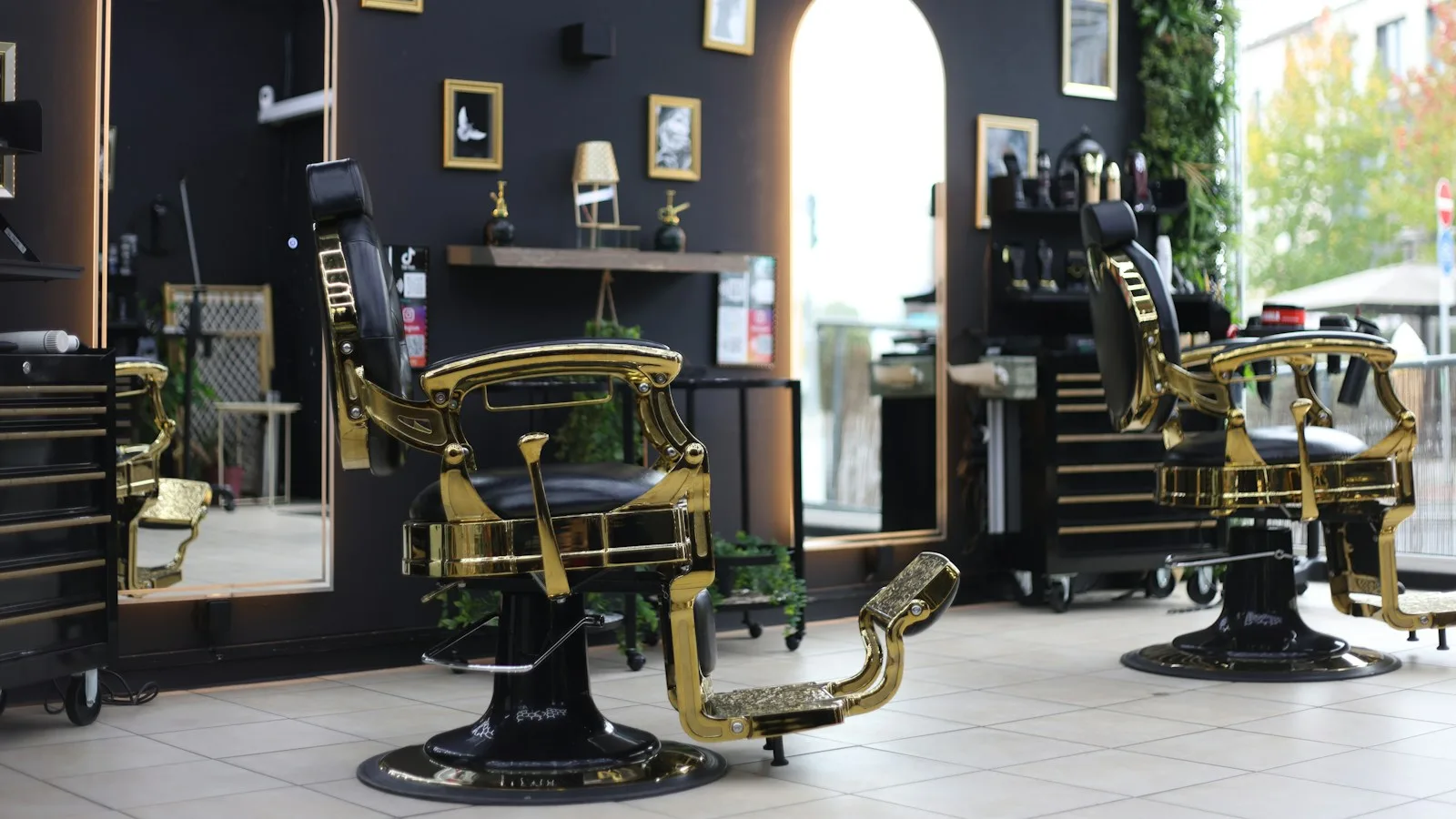
Most advice written for salons assumes a booked appointment, a long service and a client who chose a person weeks ago. A barber shop runs on none of those. It runs on short slots, walk-ins, and a queue that moves.
Follow salon advice in a barber shop and you will quietly break the thing that was working: you will put a booking wall in front of people whose whole relationship with you is that they can turn up.
Should a barber replace walk-ins with bookings?
The instinct, once a booking page exists, is to send everybody to it. For a barber that is usually wrong.
A substantial share of a barber's trade is somebody deciding at two in the afternoon that today is the day. If the website says "book online" and offers nothing for the next three days, that customer does not book for Thursday. They walk to the next shop.
Run both. Bookings for the people who want certainty, walk-ins for everybody else, and say on the website that walk-ins are welcome, because a booking page implies they are not.
Say how busy you are, not when you are free
A salon publishes availability. A barber is better off publishing a different thing: what it is like right now, or at least what it is usually like.
"Quietest before 11 and after 3" on the website does more work for a barber than a calendar, because it answers the actual question, which is "if I come now, will I wait?".
Some shops run a live queue. Most do not need one. A simple statement of the pattern, kept honest, converts a hesitant walk-in better than an empty diary does.
Short slots need different lengths, not a shorter version of one
A dry cut, a cut with a wash, a skin fade, a beard trim and a cut-and-beard are not the same length, and the gap between the shortest and longest is proportionally enormous. Fifteen minutes against fifty.
A salon can absorb a ten-minute overrun inside a three-hour appointment. A barber running fifteen-minute slots cannot: three overruns and the afternoon is an hour behind with a queue watching it happen.
Set the real length against each service and put a buffer on the ones that need it. In Webkio each service carries its own duration and buffer, so a beard trim and a full cut do not get forced into the same slot size.
Why is the queue the product?
A barber's reputation rests on whether the wait was what people expected. Not whether it was short.
Being told twenty minutes and waiting twenty-five is fine. Being told "shouldn't be long" and waiting fifty is how a regular becomes somebody who tries the new place. Whatever your website says about waiting, it has to be the truth on a Saturday as well as a Tuesday.
Clients are loyal to a chair
Barbers get this as strongly as salons do, sometimes more. Somebody who has found a barber who cuts their hair correctly will wait rather than take whoever is free.
That makes per-barber booking worth having even in a walk-in shop, because it converts the customer who would otherwise leave and come back twice. Letting clients book with a particular stylist applies here with one change: offer "anyone available" prominently, because for a barber it is a real preference and not a fallback.
What the website actually needs
Less than a salon's, and in a different order:
- Opening hours that are correct, including the ones that differ on a bank holiday. The most common reason somebody turns up to a closed barber is a website nobody updated.
- Prices. Short list, fixed numbers. Barber pricing rarely needs the ranges a colour list does.
- Where to park, or which door. A disproportionate amount of barber trade is passing and local.
- Whether walk-ins are welcome, stated, not implied.
- A booking option, for the people who want it, without making it the only route.
FAQ
Should a barber take deposits?
Usually not. The slots are short, the money is small, and the friction costs more walk-in trade than the occasional missed cut is worth. The exception is a long appointment booked well ahead, where the cost of losing it is real.
Does online booking kill the walk-in trade?
Only if the shop stops leaving room for it. Shops that hold part of each hour unbookable keep both, and the held time absorbs overruns on the busy days as well.
How far ahead should a barber's diary open?
Shorter than a salon's. Two to three weeks suits most shops: long enough for the regulars who plan, short enough that the diary is not full of bookings made six weeks ago that people have forgotten.
Is a queue app worth it for a small shop?
Rarely for one or two chairs, where the honest answer is visible through the window. It starts to pay once the wait regularly exceeds half an hour and people are leaving rather than waiting.