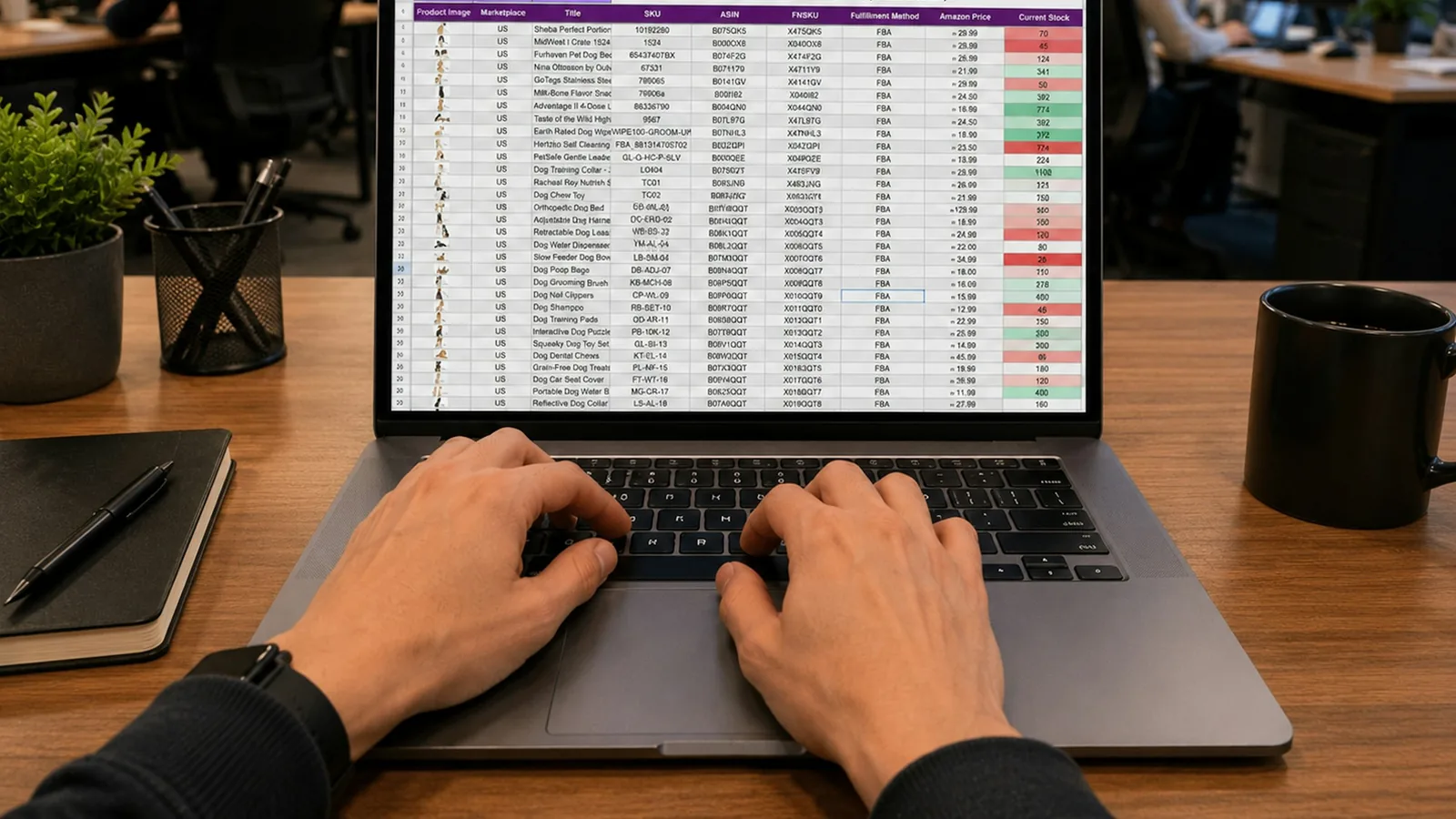
Excel can be incredibly useful for a small car rental business.
When you have only a few vehicles and a limited number of reservations, a simple spreadsheet may seem like everything you need.
You can record customer names, rental dates, vehicles, prices, deposits, and contact information in one place.
The problem usually starts when the business grows.
More vehicles mean more reservations. More reservations mean more dates, pickup times, returns, payments, pricing rules, and customer requests to keep track of.
Eventually, the spreadsheet that once made your business easier to manage can become one of the things slowing it down.
When Does an Excel Spreadsheet Stop Being Enough?
There isn't a specific number of vehicles at which a spreadsheet suddenly becomes useless.
The problem usually appears when the number of things you need to coordinate becomes difficult to manage manually.
For example, imagine you have 10 vehicles and 25 active reservations.
You may need to keep track of:
- Which vehicle is reserved
- When each rental starts
- When each rental ends
- Pickup and return times
- Customer contact information
- Rental price
- Deposit
- Additional services
- Mileage rules
- Pickup location
- Return location
- Cancellation status
- Payment status
Now imagine that several customers are also contacting you through your website, phone, email, and WhatsApp.
The spreadsheet becomes much harder to keep accurate.
And that's when mistakes become expensive.
1. Double Bookings Become Easier to Make
One of the biggest risks of manually managing reservations is booking the same vehicle twice.
For example:
A customer reserves a Toyota Corolla from July 10 to July 15.
Later, another customer contacts you asking for a car from July 13 to July 16.
If you're managing a large spreadsheet manually, someone needs to notice that the Corolla is already occupied during part of those dates.
A simple mistake can result in two customers believing they have the same vehicle.
For a small rental company, this can create much more than an administrative problem.
You may have to upgrade one customer, refund someone, rearrange another reservation, or explain why the vehicle they booked isn't actually available.
A proper rental booking system should calculate vehicle availability automatically and prevent overlapping reservations.
2. Your Availability Can Quickly Become Outdated
Another problem with spreadsheets is that availability only changes when someone updates the spreadsheet.
Suppose a customer books your last available SUV by phone.
Your employee writes down the reservation but forgets to update the availability information elsewhere.
A few minutes later, another customer sees the SUV as available and requests it.
Now you have a problem.
With an online booking system, reservations and availability can be connected.
When a vehicle is reserved, its availability changes automatically.
This means customers can search for their dates based on the reservations already in the system rather than relying on someone to manually confirm every request.
3. Phone and WhatsApp Bookings Can Make Things Even More Complicated
Many small rental businesses receive reservations through multiple channels.
A customer might:
- Call the office
- Send a WhatsApp message
- Send an email
- Contact the company through Facebook
- Submit a website form
- Book directly through the website
The more channels you use, the more important it becomes to have one central reservation system.
Otherwise, you can end up with information spread across:
Excel + WhatsApp + email + calendar + paper notes + website
That's difficult to manage.
The problem isn't WhatsApp or email themselves.
The problem is having reservations in multiple places without one reliable source of truth.
4. Pricing Calculations Become More Difficult
Rental prices aren't always as simple as:
Daily rate × number of days
You may have different rates depending on:
- Season
- Rental duration
- Vehicle
- Mileage
- Young driver
- Additional driver
- Pickup location
- Return location
- Optional extras
- Protection products
- One-way rental
Calculating all of these manually increases the chance of mistakes.
For example, a seven-day rental during peak season may have a completely different price from a three-day rental during the low season.
A rental system can apply configured pricing rules automatically instead of requiring someone to calculate every quote manually.
5. Deposits Are Harder to Track Manually
Deposits are another area where spreadsheets can become confusing.
You may have one customer who has paid a booking deposit, another who has paid the full rental price, and another whose security deposit is being held.
If this information is maintained manually, someone has to keep everything updated.
A connected rental system can associate payment and deposit information with the reservation.
This gives your team a much clearer picture of the financial status of each booking.
6. Last-Minute Bookings Can Cause Problems
Imagine that a customer wants to book a vehicle for pickup in two hours.
The vehicle appears available.
But is it actually ready?
You may need time to:
- Clean the vehicle
- Inspect it
- Refuel it
- Move it to the pickup location
- Prepare the paperwork
A spreadsheet knows that the car isn't booked.
It doesn't necessarily know that your business needs three hours to prepare it.
An online rental system can use rules such as minimum booking notice, same-day cutoff times, and turnaround buffers to make online availability match the way your business actually operates.
7. Pickup and Return Times Matter
Two reservations may technically be on different dates but still create a scheduling problem.
For example:
Customer A: Returns at 11:00 AM
Customer B: Wants to pick up at 11:15 AM
You may not have enough time to prepare the vehicle.
This is why rental availability should consider more than just calendar dates.
A proper booking system can include a buffer between reservations so that the vehicle isn't immediately offered to another customer after the previous rental ends.
8. Spreadsheets Don't Take Bookings While You're Sleeping
A spreadsheet can store reservations.
It doesn't generate them.
If someone visits your website at 11:30 PM and wants to rent a car for next week, they may have to send a message and wait until morning.
That creates friction.
Another rental company that allows the customer to check availability and book immediately can win the reservation.
Online booking allows your business to accept reservations even when nobody is sitting at the desk.
9. Customers Don't Want to Wait for an Availability Answer
One of the most common questions a rental company receives is:
"Do you have a car available from Friday to Monday?"
If your answer requires checking a spreadsheet, you have introduced a delay.
The customer may be contacting several rental companies at the same time.
If another company can immediately show available vehicles and prices, the customer may simply book there.
Real-time availability changes the experience.
Instead of:
Customer asks → employee checks → employee responds → customer decides
you can have:
Customer searches → available vehicles appear → customer selects → customer books
That's much closer to how customers expect modern online services to work.
10. Manual Bookings Take Time Away From Running the Business
A spreadsheet doesn't only create technical problems.
It also creates administrative work.
Someone has to:
- Enter reservations
- Update dates
- Change availability
- Calculate prices
- Confirm payments
- Send confirmations
- Check for conflicts
- Answer availability questions
- Update cancellations
- Track changes
One reservation may only take a few minutes to manage.
But hundreds of reservations can turn those minutes into many hours.
For a small business owner, that's valuable time that could instead be spent on customers, vehicles, marketing, or growing the company.
11. What Should Replace Your Spreadsheet?
Moving away from Excel doesn't mean you need an expensive custom software project.
For a small rental company, the goal should be a system that combines the essential parts of the rental process.
Ideally, you should be able to manage:
- Vehicles
- Availability
- Reservations
- Pricing
- Deposits
- Payments
- Rental rules
- Extras
- Pickup and return locations
- Customer information
And customers should be able to use the same system to search for availability and make reservations online.
This creates one connected process instead of several disconnected tools.
12. Keep Your Spreadsheet for What It Does Best
This doesn't mean Excel suddenly becomes useless.
Spreadsheets can still be excellent for:
- Financial analysis
- Custom reports
- Planning
- Internal calculations
- Historical data
The problem is using a spreadsheet as the core reservation system when your business has outgrown it.
Your booking system should handle bookings.
Your accounting tools should handle accounting.
Your analytics tools should handle analytics.
Using the right tool for each job reduces unnecessary manual work.
13. The Transition Doesn't Have to Be Complicated
If your business already has a fleet spreadsheet, you don't necessarily have to start from zero.
For example, Webkio allows rental businesses to import fleet information from a spreadsheet, including vehicle names, daily rates, deposits, categories, and specifications, with photos added to each vehicle after the import.
That means your existing fleet data can become the starting point for an online rental system rather than something you have to recreate manually.
14. What a Small Rental Company Actually Needs
You don't necessarily need a massive enterprise platform.
A small rental company needs a system that solves the problems it actually has.
At a minimum, it should help you:
Know what is available.
Prevent overlapping reservations.
Calculate the correct price.
Accept bookings online.
Manage deposits and payments.
Control booking rules.
Keep reservations organized.
Give customers immediate answers.
That's the real value of moving beyond a spreadsheet.
15. The Biggest Benefit Is Not the Software
The biggest benefit isn't having a fancy dashboard.
It's having fewer things to remember.
Instead of constantly thinking:
"Did I update that reservation?"
"Is that SUV available?"
"Did this customer pay the deposit?"
"Can someone book this car today?"
"Did I calculate the weekend rate correctly?"
the system can apply the rules you've already defined.
That gives you something extremely valuable as a small business owner:
less uncertainty.
Conclusion
Excel can be a great starting point for a small car rental company.
But as your fleet and reservations grow, manually managing bookings can become increasingly difficult.
Double bookings, outdated availability, pricing mistakes, scattered customer messages, and repetitive administrative work can all start costing you time and money.
The solution isn't necessarily complicated.
A modern car rental booking system can connect your fleet, availability, pricing, reservations, payments, and customers in one place.
If you're still managing most of your rental bookings in Excel, it may be time to ask yourself a simple question:
Is the spreadsheet still helping my business grow, or am I spending more time managing the spreadsheet than managing the business?
For many small rental companies, that's the point where moving to an online booking system starts to make sense.
What replaces the spreadsheet
The cost side of staying manual is quantified in the cost of manual car rental bookings, and the availability questions a spreadsheet cannot answer in how to stop answering availability questions. What a replacement has to cover is set out in what a rental booking system needs. What replaces the spreadsheet is a car rental booking system holding the fleet, the availability and the rates in one record.
FAQ
Is a spreadsheet ever the right tool for rental bookings?
For a handful of vehicles and one person answering every enquiry, it can be. It stops working at the point where two people edit it, or where customers expect an answer while that person is asleep.
Can existing spreadsheet data be moved into a booking system?
The fleet itself can: vehicle names, daily rates, deposits, categories, locations and specifications import from a CSV file. Historic reservations are usually not worth migrating, since their value is in reporting rather than in operations.
What is the most expensive spreadsheet mistake?
A double booking, because it is discovered by the customer rather than by you. The cost is the refund, the replacement vehicle and the review, not the few minutes it took to make the error.
Does moving online mean giving up manual control of bookings?
No. Reservations taken by phone can be entered by staff and still update the same availability, which is the point: one record of what is free, regardless of how the booking arrived.
How long does the transition usually take?
The fleet setup is the bulk of it, and importing rather than retyping shortens that considerably. Most of the remaining work is deciding the rules you already apply informally, such as buffers, minimum notice and deposits.