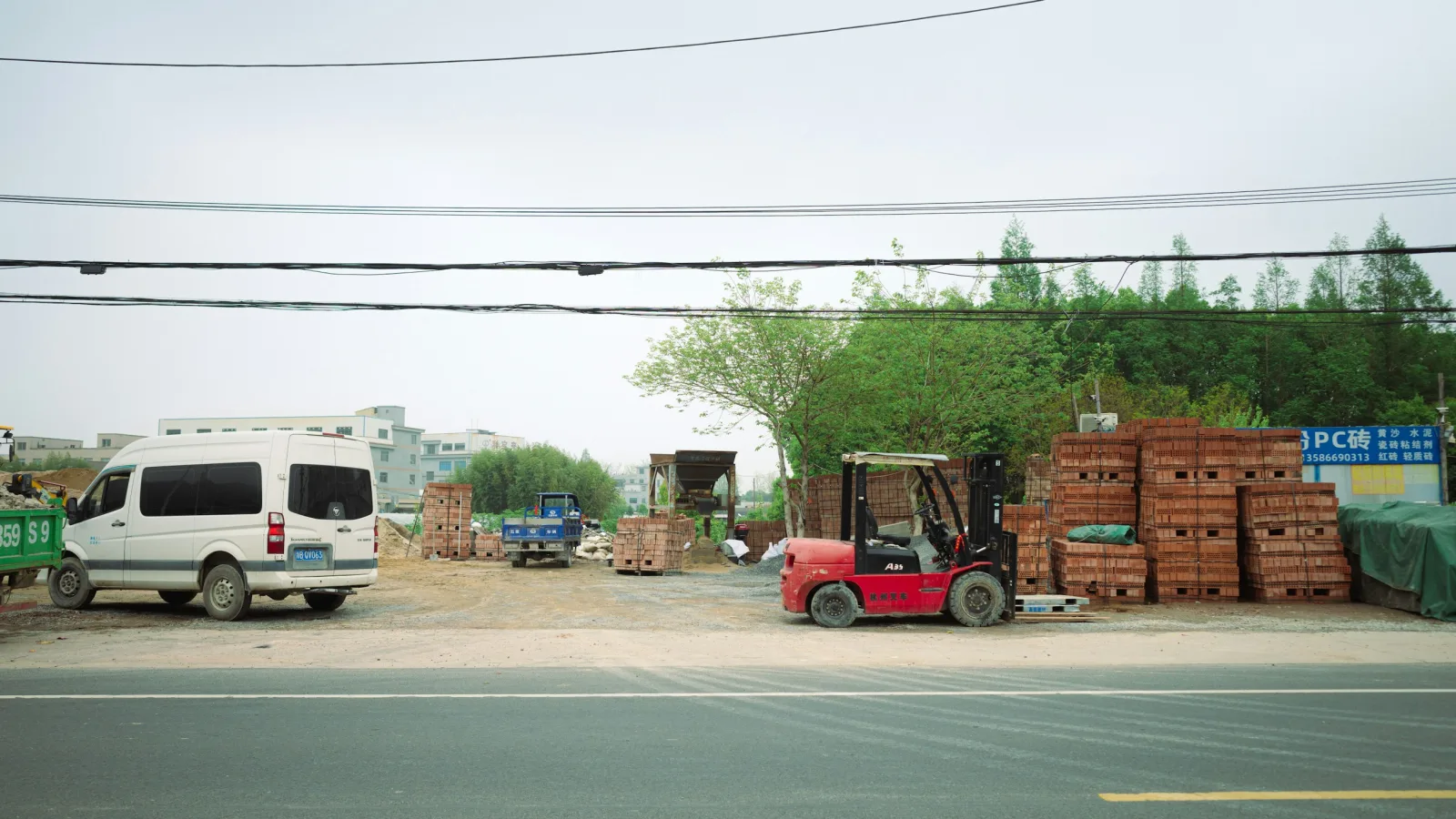
You have five identical breakers. Three are out, one is in for a service, and somebody has just asked for two on Thursday. The answer is no, and finding that out took a walk to the yard and a look at a whiteboard.
Equipment hire has a specific shape of availability problem: the customer does not want a particular machine, they want any one of the machines you have. Getting that right removes most of the phone calls.
The listing is the product, the units are the stock
Separate the two and the problem mostly solves itself:
- The listing is what somebody hires: "Heavy breaker, petrol". It carries the photograph, the description, the day rate and the deposit.
- The units are the actual machines behind it. Each has its own label or asset number and its own status.
Availability becomes arithmetic. Five units, three on hire Thursday, one in the workshop, so the site can sell exactly one. Nobody walks to the yard.
This also fixes the group enquiry. Two breakers on Thursday stops being a question and becomes an answer, immediately, at whatever hour it was asked.
Servicing has to come out of the pool
The most common cause of an oversell is a machine that everybody knows is broken and no system knows is broken. Two mechanisms cover it, and they are not interchangeable:
- Status for the open-ended. A machine waiting on a part is out of the bookable count until somebody puts it back. It stays out precisely because it needs a human decision.
- A dated block for the planned. An annual service, a PAT test, a scheduled inspection. These come out for known dates and return on their own.
Using a status for something scheduled means somebody has to remember to reverse it, and eventually nobody does, so your fleet silently shrinks. Using a block for something open-ended means the machine reappears on a date that meant nothing.
Turnaround is not instant, so do not let the calendar pretend it is
A machine returned at five is not hireable at five. It needs checking, cleaning, fuelling and often a test. If availability assumes otherwise, you will promise somebody a machine that is standing in a puddle of concrete dust.
A turnaround buffer applied automatically between hires handles this without depending on whoever is on the counter that day. Set it to whatever a genuine check-and-clean takes for your heaviest kit rather than your lightest.
Late returns are an availability problem before they are a money problem
In equipment hire a late return does not merely cost you a late fee. It makes the next booking impossible, and that customer is standing in your yard.
Two settings help:
- A grace period, because a machine twenty minutes late is not worth a charge or an argument.
- A late fee per hour beyond that, stated upfront, which mostly serves to make people ring you rather than simply not turn up.
The fee matters less than the phone call it produces. Knowing at nine that a machine is coming back at two lets you move the next booking rather than lose it.
Specifications that answer "will this do the job?"
Equipment listings fail differently to vehicle listings. Nobody needs a photograph from four angles; they need to know whether the machine will do the work and whether they can get it into the space.
Publish the things that decide that:
- Weight, because it decides whether one person can move it and whether it can go upstairs.
- Power source, because mains, battery, petrol and diesel are not interchangeable on a site with no power.
- Capacity, in whatever unit the machine is actually rated in.
Capacity is deliberately free text rather than a number, because a digger rated at 1.5 tonnes and a mixer rated in litres cannot share a numeric field without one of them becoming nonsense.
Count the yard, properly, once
Whatever you use, reconcile it against the yard at least annually. Machines get sold, written off and stripped for parts, and a stock list that is two machines optimistic will oversell twice before anyone diagnoses why.
If you are moving off a whiteboard, an equipment hire website that counts units rather than listings is far easier to keep honest.
FAQ
Should identical machines be separate listings? No. One listing with the units behind it. Separate listings means duplicate photographs and descriptions, and a customer choosing between things that are identical to them.
How do I handle machines that are similar but not identical? If the difference would change whether the customer could do the job, split the listing. If it would not, keep one listing and note the variation in the description.
What about kit hired out with an operator? The machine's availability and the operator's availability are two different constraints. Track the machine as stock and the operator as a scheduling problem, or you will book one without the other.
Can I let customers reserve a specific unit? Rarely worth it. Customers want a working machine on a date, and committing to a serial number removes your ability to swap when one fails.
Read next
- How to hire out equipment online without losing kit - the wider process.
- Preventing double bookings - the same arithmetic for vehicles.