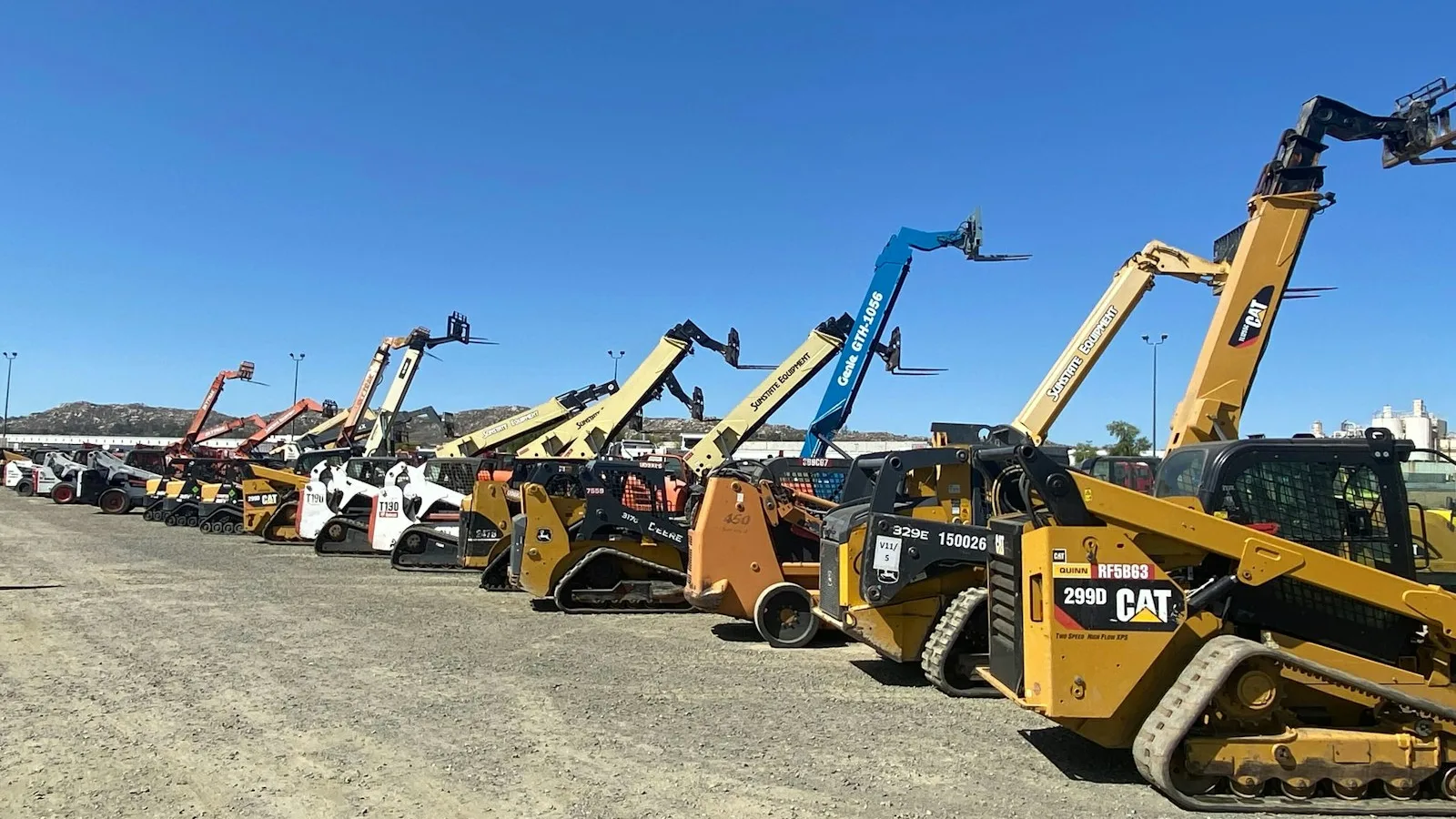
Plant and tool hire runs on two numbers, and most firms can only answer one of them quickly.
What is on the yard today, free to go out. And what it costs you when a mini digger comes back on Thursday instead of Tuesday, with a bent bucket.
The first is an availability problem. The second is a policy problem. Both get solved in the same place: the page where the customer books.
Live inventory beats a phone call
A tradesman ringing at seven in the morning to ask whether you have a breaker free is a customer you are about to lose to whoever answers first. Half the time the answer is in someone's head, and that someone is on site.
Putting the inventory online turns that into a self-service answer. Each item goes in individually - not "we have four scaffold towers" but four towers, each with its own record, its own service history and its own booking calendar. Then availability is a fact the site can state, and a hire can be confirmed at seven in the morning without anyone picking up.
Group by the job rather than by your internal categories. A customer searches for what they are trying to do - break concrete, lift a beam, dry a room - not for your asset class.
Price the way the trade actually hires
Day rate, week rate, weekend rate. The week rate is usually well under seven days, because a week out is worth more to you than the same kit sitting idle for four of them.
Set all of them per item and let the booking form pick the cheapest correct one for the dates chosen. A customer who works out that seven days costs less than the six they asked for does not thank you for the arithmetic - they wonder what else the pricing is hiding.
Consumables are separate and worth stating: blades, discs, fuel, bags. Charged on return, or sold up front, but never a surprise.
The damage waiver is the whole conversation
Equipment hire has no driver, no fuel policy and no mileage. What it has instead is a damage waiver, and it is the single most important thing on the booking page.
Say four things, in plain words:
- What it costs. A percentage of the hire, or a fixed daily amount.
- What it covers. Accidental damage in normal use.
- What it does not. Loss, theft, misuse, and damage from using the kit for something it is not for. Be specific - this is where disputes live.
- The excess. The number the hirer pays regardless.
Then hold a refundable deposit alongside it, sized to the kit rather than to the hire. A £40 day rate on a £3,000 machine needs a deposit that reflects the machine, not the day.
Late returns are a pricing decision, not a grievance
Kit that comes back late has already cost you the next hire. Decide in advance what that is worth and publish it, rather than deciding in anger on the day.
The usual structure is a grace period of an hour or two, then the day rate again for each additional day. It is fair, it is easy to explain, and it converts an annoyance into revenue. What does not work is an unwritten policy, because an unwritten policy gets waived every time the customer pushes back, and the customers who push back are exactly the ones who are late most often.
Block a turnaround gap between hires too. Kit needs checking, cleaning and often charging or refuelling before it goes out again. A calendar that allows the next hire to start the moment the last one ends will eventually hand out a machine that is not ready.
Collection points, and who is coming to get it
Where the kit is collected from is part of the booking, especially once you have more than one yard. Say which one, with an address and opening hours, and let the customer choose it when they book rather than finding out afterwards.
If you deliver, that is an extra with a price, and it belongs in the booking flow next to the item. A customer choosing a floor sander will happily add delivery. The same customer will not ring back to ask about it.
Take the ID at booking, not at handover
The hire trade has always taken identification at the counter. Doing it at the point of booking instead removes the awkward moment at handover and lets you turn away a booking that was never going to work before you have blocked the kit for it.
Keep it proportionate to the value of the item, keep only what you need, and delete it when the hire is done and the deposit is released.
Put it together
The order that works is the boring one: inventory in first, rates and rules second, appearance last. A yard full of kit with no way to book it is losing hires today; a plain page that can take a booking is earning this afternoon.
Set up your fleet covers getting inventory in, Rental availability covers what customers see when they search, and the equipment hire website builder page shows the finished flow. You can start for free and put your five busiest items in tonight - that is usually enough to see whether the phone gets quieter.
FAQ
Do I need a separate listing for every single item?
Yes, if you own more than one of something and want them bookable at once. A listing that says "we have four breakers" will take a fifth booking. Four items, each with its own units, cannot.
How do I stop equipment being double-booked between jobs?
Set a turnaround buffer. A breaker back at 4pm is not ready for a 4pm hire, and the gap between hires is a setting rather than something you have to remember.
Should I take payment up front or on collection?
Take something up front. A free reservation is a free option and options get abandoned. A deposit is usually enough, and it also gives you the card details you will want if the kit comes back damaged.
Read next
- Equipment hire deposits - how much to hold and how to say it.
- Hiring out five of the same machine - availability when your stock is identical units.
- Day, weekend and weekly rates - pricing the hire periods people actually book.