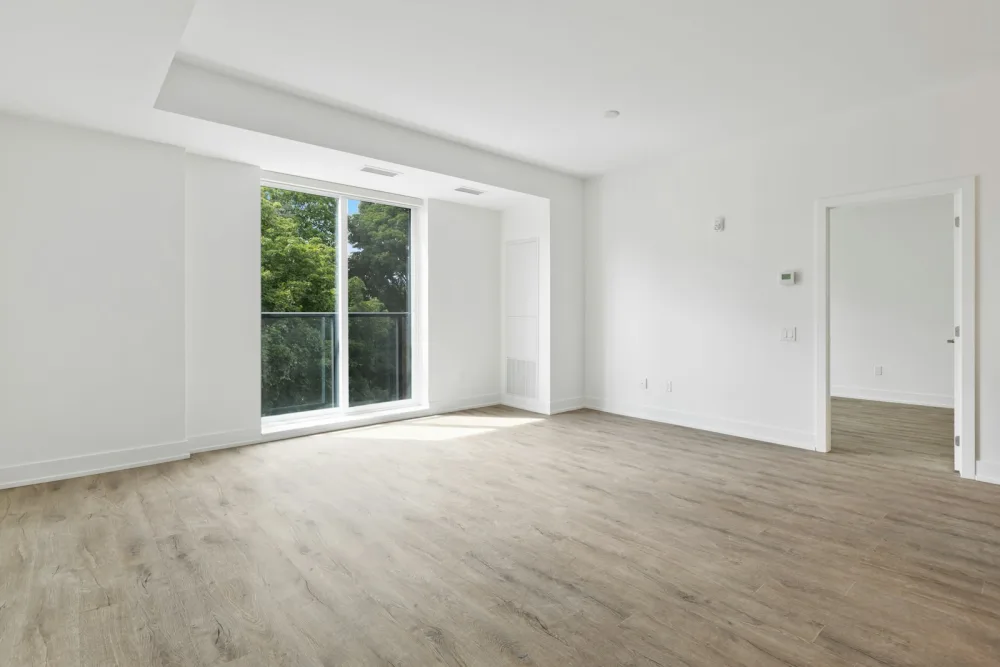
A letting agent copies a sales listing template for a two-bedroom flat, changes the price to a monthly figure, and publishes. The listing is accurate, well written and gets almost no enquiries.
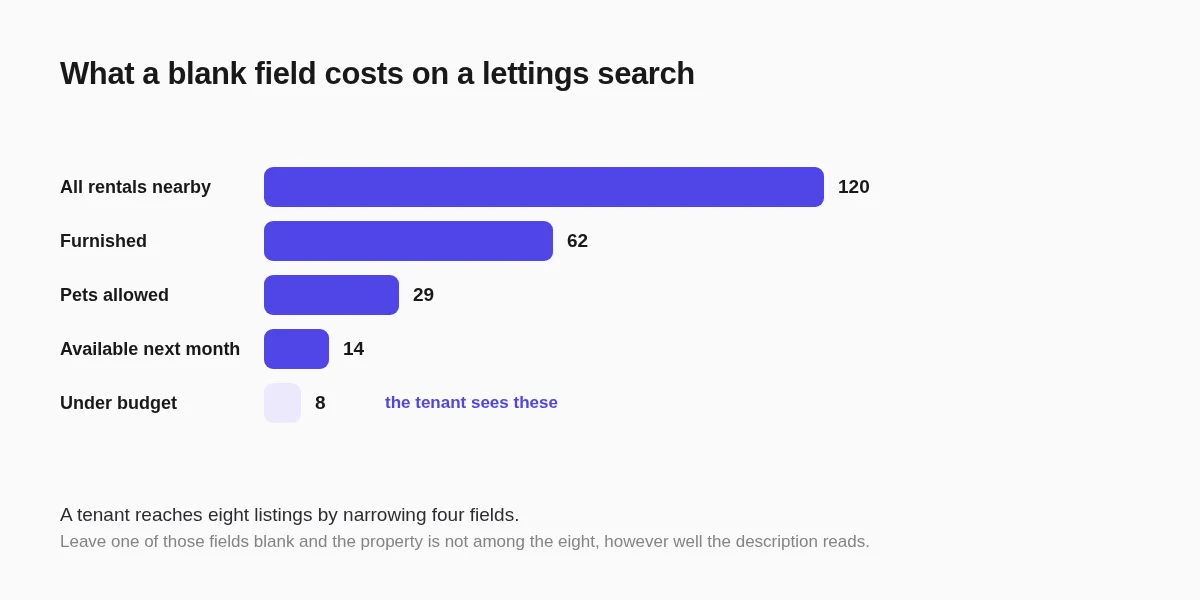
The reason is that tenants and buyers do not search the same way, and a letting advertised with a buyer's fields is invisible to half the people looking for exactly that flat.
Tenants filter on different things
A buyer is choosing something permanent, so they narrow on price, bedrooms, area and property type, then read.
A tenant is solving a dated logistics problem. They have a move-in date, a monthly ceiling, a sofa or no sofa, possibly a cat, and a budget that either includes bills or does not. Those constraints are absolute: a tenant with a dog does not compromise on a no-pets flat, they filter it out and never see it.
The six fields a letting actually needs
- Furnishing. Furnished, part furnished or unfurnished. This is a hard filter for anyone moving without furniture and for anyone moving with it.
- Pets. Say yes or no. Leaving it blank reads as no to a tenant with a pet and produces a wasted enquiry from one without.
- Bills included. Changes the real monthly cost by a lot, and is the single most common question in letting enquiries.
- Deposit. Tenants budget the move-in cost, not the rent. A deposit figure on the listing prevents the drop-out that happens when it appears later.
- Minimum term. Six months and twelve months attract different people. A tenant on a work placement will not enquire on an unspecified term.
- Available from. The date is a filter, not a detail. Somebody whose current tenancy ends on the 3rd of next month cannot use a flat that is free in four months.
On a site built here these are declared fields on a letting rather than free text, which is what lets a tenant narrow by furnishing and by pets rather than reading forty listings to find out. A property being sold never carries them, and a property being let never carries tenure or chain-free, because those are meaningless in the other direction.
Price the way a tenant reads it
Rent is quoted monthly in most of the UK market and weekly in parts of London, and mixing the two on one site produces listings that look mispriced by a factor of four.
Pick one and use it everywhere. If you have to show both, the one in the price field should be the one your tenants search by, and the other belongs in the description. A price qualifier does the rest of the work when the number needs a caveat.
The description answers what the fields cannot
With the structured fields carrying the filtering, the description is free to do the thing prose is good at: the character of the place and the practical detail nobody thinks to make a field for.
What is the parking actually like on a Tuesday evening. Which way does the living room face. How far is the station on foot rather than by car. Is the second bedroom a real bedroom or a study with a bed in it. Tenants who arrive at a viewing already knowing these things are the ones who take the tenancy.
Photograph an empty property properly
Lettings are photographed in the gap between tenancies, in a hurry, often on a grey afternoon, and it shows.
- Shoot with the lights on and the curtains open, even at midday.
- Photograph rooms from the doorway corner rather than the middle.
- Include the kitchen storage and the bathroom, because tenants look for what is missing.
- Skip the bin cupboard and the meter, whatever the temptation to be complete.
A floorplan matters even more on a letting than a sale, because a tenant is trying to work out whether their existing furniture fits and has no chance to measure before applying.
Keep the listing honest about availability
The fastest way to lose a tenant permanently is a listing that is still live after it is let. They enquire, they get told it is gone, and they stop trusting the site.
Marking a property as let the day it is agreed costs a few seconds and preserves the one thing a small agency has over a portal, which is that the listings are real. If you want the let ones to stay visible as proof of activity, show them as let rather than removing them.
FAQ
Should I advertise the deposit amount?
Yes. Tenants budget the total move-in cost rather than the monthly rent, and a deposit that appears only after an enquiry is a common reason applications stall. Where the deposit is capped by law, showing the figure also demonstrates you are within it.
Is it worth saying whether pets are allowed?
Always, and say it either way. A blank pets field is read as a refusal by anyone with an animal, so you lose those enquiries anyway, and you gain wasted ones from people who will ask the question in an email instead.
How far in advance should a rental be listed?
Usually four to six weeks before it is available. Earlier than that and the enquiries come from people who cannot commit yet, later and you carry an empty month. The available-from date does the work either way, so listing early is safe as long as the date is on it.
Do rental listings need an EPC?
Yes. In the UK an EPC is required to market a property for letting as well as for sale, and the rating has to be advertised, so it belongs in the field rather than in the small print.
Where this goes next
The lettings side of the module is described on the letting agent website builder page, with the field-by-field setup in property listings and settings.
The writing side of a listing applies to lettings too, and what happens after somebody enquires is covered here.
Compare your options
- An Alternative to Relying on the Property Portals - what the portals cost you and what a direct site changes.