Most small business websites look fine. They are on HTTPS, they work on a phone, and somebody was paid to design them. The question nobody seems to have measured is whether you can actually do anything on them.
So we checked. We took 699 independent businesses across 7 trades and 19 US cities, all of them listing a website, and looked at one thing: can a customer book, order or buy without picking up the phone?
42.6% cannot be booked online at all. Not on their own website, and not through any platform they link to.
What we found
| Share of sites | |
|---|---|
| Can be booked or bought from on their own site | 32.3% |
| Send you to a platform that charges them a commission | 25.0% |
| Cannot be booked online anywhere | 42.6% |
The middle row is the one business owners underestimate. Those sites do take bookings, just not on the address the owner pays for. The customer searched the business by name, landed on its website, and was handed to OpenTable, Mindbody, DoorDash or Vagaro, who charge for the introduction.
It varies more by trade than by city
Share of each trade with nothing bookable on their own website:
| Trade | Nothing bookable on their own site | Sites checked |
|---|---|---|
| Hire and rentals | 89% | 18 |
| Dentists and clinics | 82% | 135 |
| Trades and workshops | 78% | 114 |
| Hair and beauty | 70% | 105 |
| Gyms and studios | 63% | 150 |
| Restaurants, cafes and bars | 53% | 108 |
| Hotels and guesthouses | 48% | 69 |
Rentals and clinics are the furthest behind. Hotels and restaurants are the furthest ahead, and for a simple reason: the platforms came for them first, so they learned to take bookings online before anyone else, even if the booking happens somewhere other than their own site.
The thing we expected to find, and did not
We assumed we would find dated websites. The tooling we used was built to detect them: Flash, table layouts, missing HTTPS, no mobile viewport, pre-HTML5 markup.
It barely found any.
| What we looked for | Share of sites |
|---|---|
| No HTTPS | 0.3% |
| Uses Flash | 0.6% |
| Laid out with tables | 1.4% |
| Not mobile-ready | 2.6% |
| End-of-life jQuery | 3.6% |
| Pre-HTML5 markup | 5.7% |
20.6% of the sites we scanned had no technical faults at all.
This matters because "your website is old" is the most common opening in small business web design sales, and in the United States it is mostly not true any more. The sites are modern. They are just brochures.
How we did it
Businesses came from OpenStreetMap, which publishes business listings under an open licence, filtered to those that list a website. We read each homepage once, identifying ourselves honestly in the request and pausing three seconds between sites. Nothing was crawled deeply and no business is named here.
For the second question - whether a site hands booking to a platform - we re-read 252 of the sites that had nothing bookable on their own pages, and looked for links to about 59 known booking and ordering services.
31% of the sites we tried could not be read, and the reasons divide roughly into thirds: domains that no longer resolve or time out, bot protection answering 403 or 429, and pages that render entirely in JavaScript so there is nothing in the HTML to read. We are reporting that rather than hiding it, because it biases the sample: a site behind bot protection or built in JavaScript is usually a better-resourced one. If anything, that means the real picture is slightly better than our numbers, not worse.
What this does not tell you
Whether those businesses want online booking. A restaurant that takes reservations by phone may be doing it deliberately, and a one-person workshop may not want its calendar filled by strangers.
What we can say is that the ones who clearly do want it are mostly paying somebody for it. Every OpenTable, Mindbody, Zocdoc and Angi link in our sample is a business that decided online booking was worth money, and then rented it rather than owning it.
A platform link also proves only that the option exists, not that most of their bookings come through it. A badge in a footer counted the same as a prominent "Book now" button.
If you run one of these businesses
The useful question is not whether your website is modern. It probably is. The question is what happens when somebody who already decided to use you arrives on it at nine in the evening.
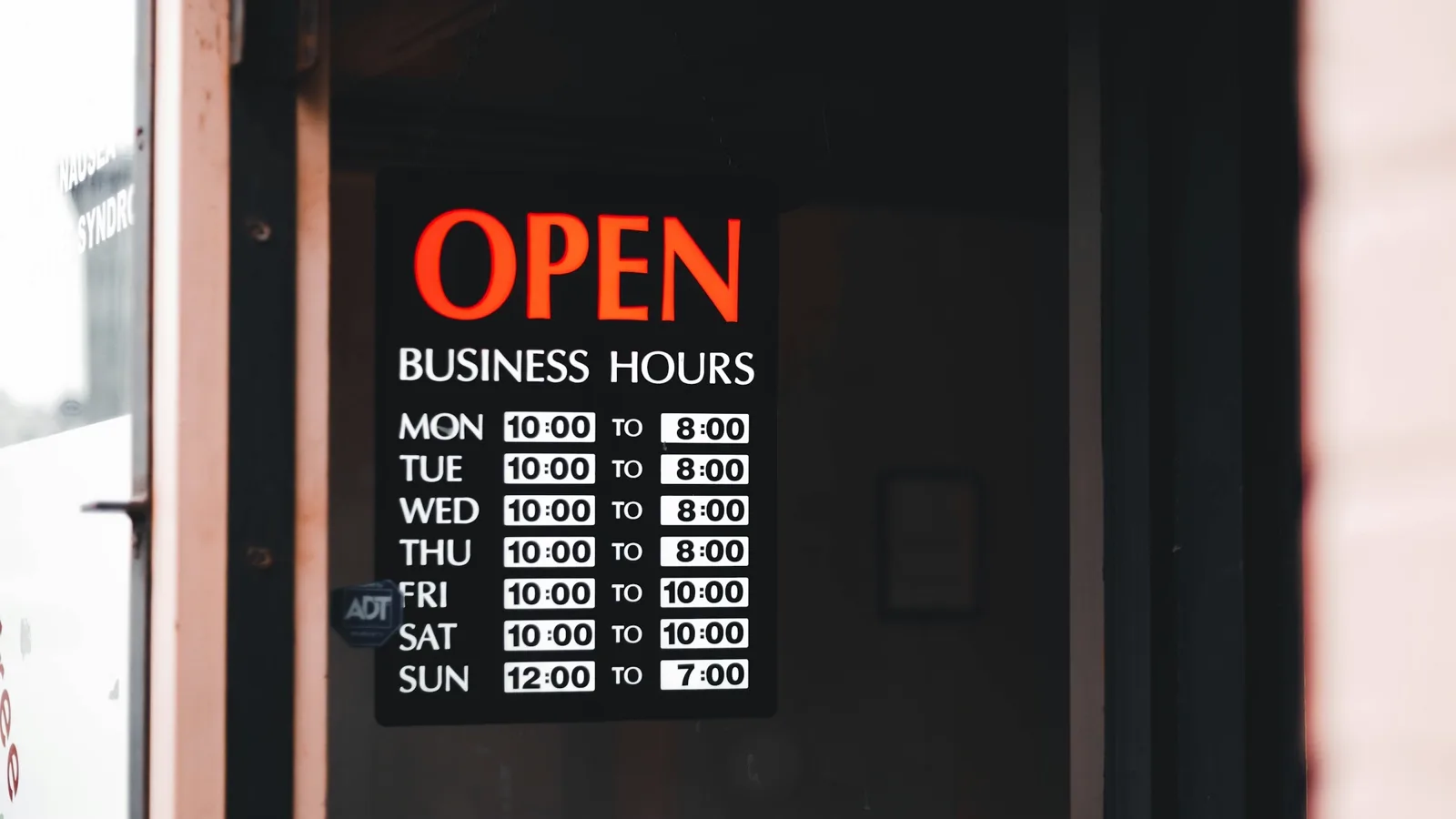
If the answer is a phone number and an opening-hours table, you are converting the easiest customer you will ever get into a task they have to remember tomorrow.
Webkio exists for that gap: bookings, online ordering and hire that run on your own website, with the money going straight to your own payment account rather than through somebody else's checkout.
Frequently asked questions
What percentage of small businesses can be booked online?
In this study of 699 independent US businesses that have a website, 32.3% could be booked or bought from on their own site, 25.0% handed the booking to a third-party platform, and 42.6% could not be booked online anywhere at all.
Are small business websites outdated?
Mostly not, at least in the United States. Only 0.3% lacked HTTPS and 2.6% were not mobile-ready, and 20.6% had no technical faults at all. The common problem is not that these sites look old, it is that they cannot take a booking.
Which trades are furthest behind on online booking?
Hire and rentals are furthest behind, with 89% having nothing bookable on their own website. Hotels and guesthouses come closest, at 48%, largely because the booking platforms reached them first.
How was this measured?
Businesses were sampled from OpenStreetMap, filtered to those listing a website, then each homepage was read once with an identifying user agent and three seconds between requests. 31% of attempts could not be read, mostly bot protection, and that figure is reported because it biases the sample toward sites that are easier to reach.
Can I cite these numbers?
Yes, with a link to this page. They were measured in November 2026 and we intend to repeat the study, so quote them with the date attached.
Using these figures
Please do. The numbers above are free to quote with a link back to this page. The study was run in November 2026 and we intend to repeat it, so the figures carry a date rather than pretending to be permanent.