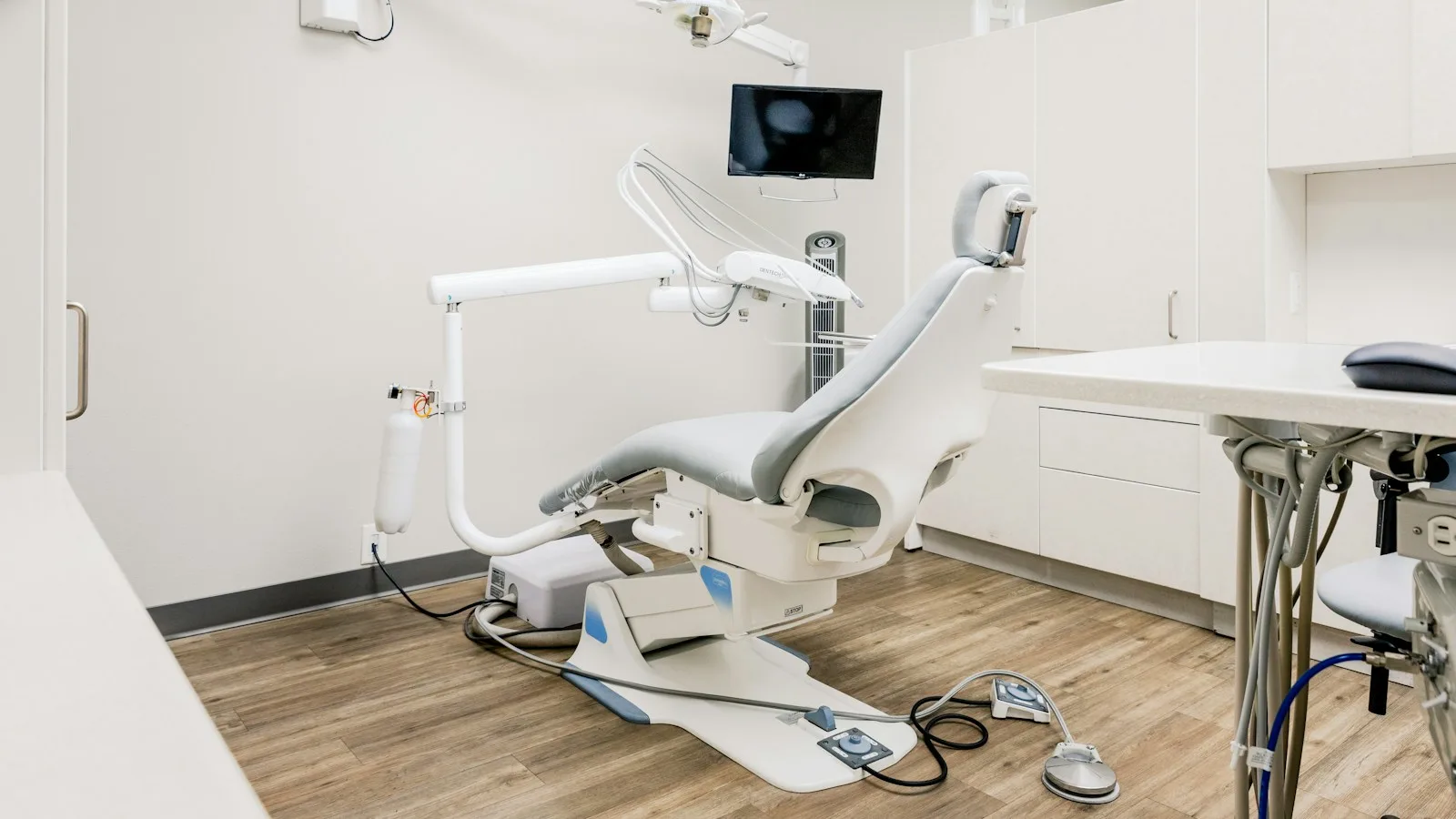
A dentist opening a second chair asked an agency, a freelancer and a builder what a new website would cost. The answers came back as a five-figure project, a four-figure one, and a monthly subscription. She assumed somebody was wrong. Nobody was. They were pricing three different jobs, and none of them had asked what she needed the site to do.
So start there, because that is what decides the number.
The three things a dental site has to do
Be found and trusted. Who the dentists are, where you are, your hours, which insurance you take, and what a first visit involves. This is the brochure part, and on its own it is cheap.
Take appointments. A patient picks a service, sees real availability and books without phoning. This is where most of the cost difference lives, because a calendar that knows each dentist's hours, each treatment's length and the gaps between them is the complicated part of any clinic site.
Take money, sometimes. A deposit for a new-patient exam or a whitening session, through a payment provider. Optional, and only worth it if no-shows are costing you chairs.
A quote that does not say which of the three it covers is not yet a quote.
What moves the price
- Who writes the treatment pages. Implants, aligners, emergency care: each needs a page a patient can understand. If you supply the words, you pay for building. If you do not, you pay for writing, and that is often the biggest line.
- How many dentists and hygienists take bookings. One shared diary is simple. Four people with different days and different treatments is structure, and structure costs.
- Whether booking talks to your practice software. A link from the website into the scheduler you already run is cheap. A two-way sync built for you is a project, and it is the one most often underestimated.
- Bespoke design. The most visible cost, and rarely the one that changes how many patients book.
What it costs to run, published prices
The build is paid once. The running cost is paid every year, so compare that.
On a website builder, the running cost is the plan that covers what you need. As published on November 4, 2026: Squarespace's Basic plan is $25 a month billed monthly (its own price list), and booking needs its separate Acuity Scheduling subscription, $20 a month billed monthly (Acuity's pricing). Wix's Core plan, the first that includes scheduling, is $29 a month billed yearly (Wix's plans article).
Rather than take our word for any of it, tick what your site needs in the website cost calculator. It prices the same site on Webkio and seven other builders, each row linked to the vendor's page, with the percentage on online payments included where there is one.
There is no equivalent table for agencies, and we will not invent one. An agency quote depends on the brief and on who you ask, so ask for it in two numbers: the build, and the yearly cost from year two.
The costs nobody puts on the quote
- The domain. Small, yearly, and it should be registered in the practice's name, not the agency's.
- Payment fees. If you take deposits, the provider takes a percentage of each one.
- Changes. Who updates the holiday hours, a new hygienist's photo, a price? If the answer is "send us an email", each change has a cost, and the usual result is a site that stays wrong.
- Accessibility. The Justice Department's guidance on web accessibility lists medical offices among the businesses whose online services the ADA covers. A site that a screen-reader user cannot book through is a problem you pay for later, not a saving.
Free things worth doing first
Your Google Business Profile can carry a booking link. Google's help explains how to add one to your profile, or to connect a booking provider Google works with. Point it at the page where patients actually book, and some patients will book from the search result without reaching your homepage at all.
And put prices on the site, at least as ranges. Patients compare before they call, which is the whole argument of publishing dental prices.
What to ask before you sign
- Does the price include online booking, or is that a separate product with its own fee?
- What does year two cost, with the build finished?
- Can our own front desk change hours, prices and text without paying anyone?
- Who owns the domain and the content if we part ways? (More on that in who owns your website.)
- How long until a patient can actually book?
The dental templates show what the configured version looks like before anybody quotes, and How much does a medical practice website cost covers the same ground for a wider clinic.
Questions
Is a cheap dental website a false economy?
Only if it cannot take a booking. A site that only shows information leaves every appointment on the phone, so its real cost is the front-desk time it fails to save.
Should the website connect to our practice management software?
Only if you need availability in two places. Many practices run online booking for new-patient exams and hygiene visits only, keep complex treatment planning on the phone, and skip the integration entirely.
Do we need deposits?
If missed new-patient appointments are a real problem, a small deposit at booking gives the patient a reason to turn up, or to cancel in time for somebody else to have the slot. The no-show calculator puts a yearly figure on what they cost you now.
What is the cheapest way to start?
A builder plan that includes booking, your own domain, and treatment pages you write yourself. Add the rest once you know how patients actually contact you.