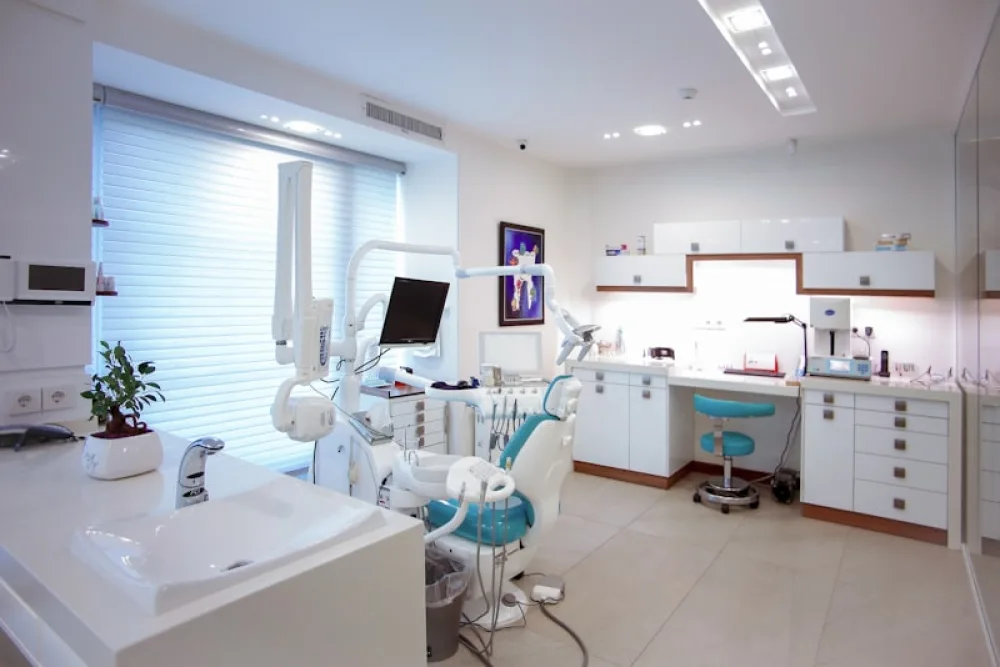
A healthcare website has two jobs at once: reassure - through clarity, calm design and visible credentials - and remove friction from getting seen. Patients arrive anxious or in a hurry; the site's structure should respect both.
What patients actually check
Before choosing a provider, patients look for a predictable list: services offered, who the practitioners are, where you are and when you're open, what it costs (or which insurers you take), and what other patients say. Put each of these one click or less from the homepage - this is not the place for creative navigation.
Practitioner profiles do the heavy lifting
Healthcare is chosen on trust in people. Every practitioner needs a real photo, specialty, credentials and languages spoken, plus a human sentence or two. "Dr. Ionescu has 15 years in family medicine and is endlessly patient with nervous children" does more than any mission statement.
Online booking, for the appointments that suit it
A large share of appointment requests happen outside office hours. Webkio's built-in appointment system handles services, practitioner schedules, buffers and reminders - so routine bookings happen at 10pm without your receptionist, while urgent cases still see your phone number at the top of every page.
Keep the operational facts sacred
Nothing damages trust like arriving to a closed clinic. Hours (including holiday changes), address with parking notes, and emergency instructions must be current above all else - assign someone to own them.
Plain language wins
Write services the way patients search: "teeth straightening" alongside "orthodontics", "skin check" alongside "dermatoscopy". This is kinder to worried readers and precisely what local search rewards - most of your new patients start at "[service] near me".
A note on tone
Calm colours, generous whitespace, no countdown timers or aggressive pop-ups. The design itself is a trust signal: a cluttered, pushy site reads like a cluttered, pushy practice.
Start from a template designed for care
The free health & medical templates are built around the checklist above: Medical Practice for clinics and GPs, Dental Clinic for dentistry, and Pet Care for veterinary practices. Booking, contact forms and practitioner sections are ready to fill in.
Everything above is practice-specific. The rest - domain, HTTPS, privacy and cookie pages, page speed on a phone - is in what every small-business site needs.
Start free - have the essentials live today, and let the front desk stop reading out your opening hours. If the appointment diary is the part you would rather not build, that is what the appointment booking website builder handles.
FAQ
What should a clinic website include?
Your services, practitioners and their credentials, opening hours, location and parking, insurance or payment details, and how to make an appointment.
Do patients book appointments online?
Increasingly, yes - especially outside opening hours, which is exactly when your front desk cannot answer.
How do I build trust on a medical website?
Real photographs of the practice and the team, stated qualifications, and plain language instead of jargon.
Read next
- What a medical practice website costs - the budget question, answered with the parts that actually cost money.
- How to make a dental practice website - the same job with a dentist's pages and priorities.
- Veterinary clinic websites and online bookings - and the version for animal patients.