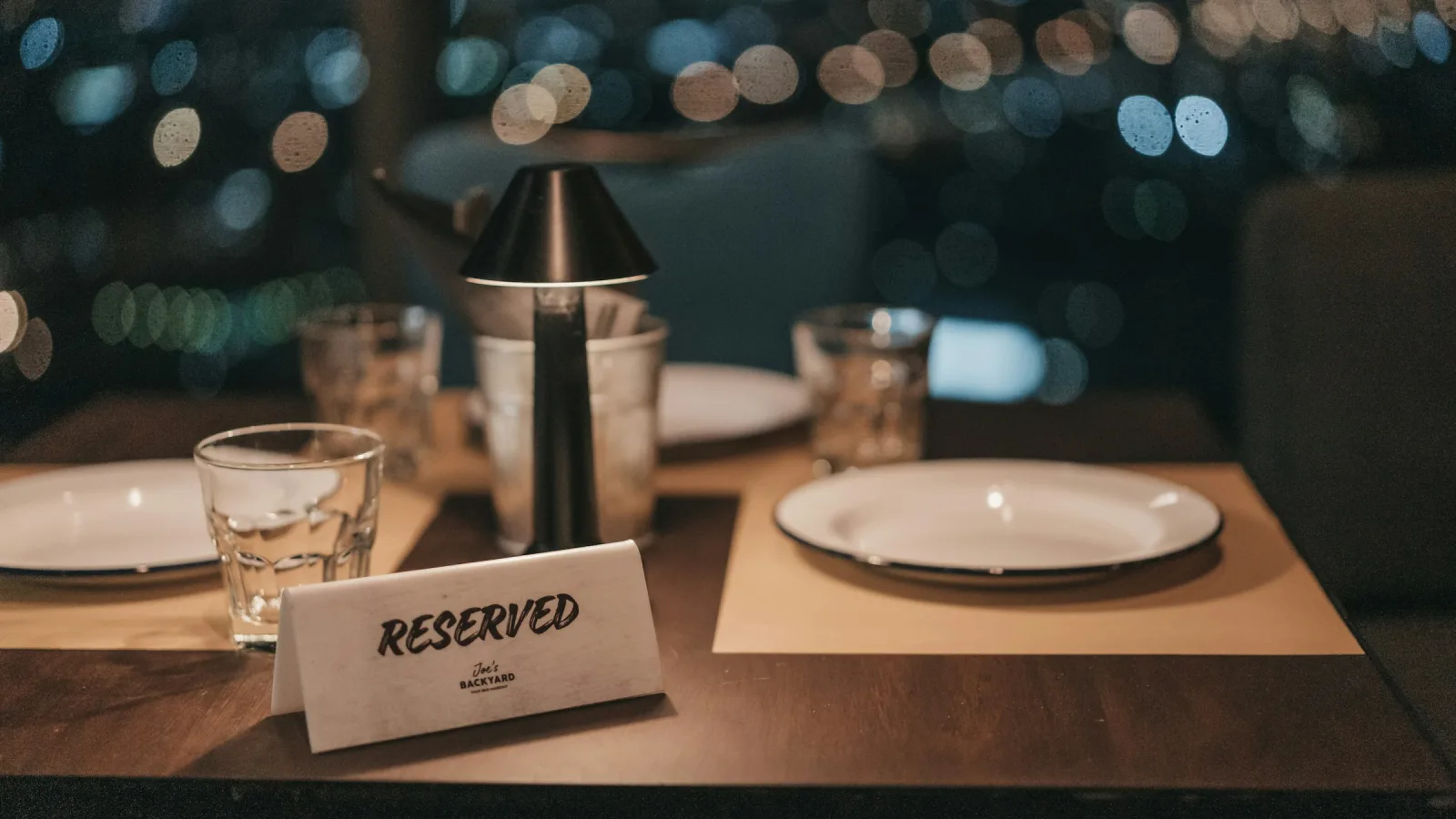
A twelve-cover Saturday no-show is not a lost booking. It is a table that could have been sold twice, held empty through the only two hours of the week that reliably make money.
Restaurants have a worse version of this problem than most trades. The slot is perishable, the peak is short, and the person who does not turn up has usually not decided not to come until quite late.
The three levers, in the order worth trying them
1. Reminders. The cheapest thing that works, and the one most places have not switched on. A message the day before and a short one on the day converts a forgotten booking into a cancellation, and a cancellation with four hours' notice is a table you can still sell. This alone moves the number more than anything else on the list.
2. A cancellation window you actually state. "Please let us know by midday if your plans change" is a request people honour far more than restaurateurs expect, because most no-shows are not malice. They are a booking made three weeks ago by somebody who now has a reason not to come and no obvious way to say so. Make saying so easy and one-click.
3. A deposit or card on file. The strongest lever and the one with a real cost, which is why it is third rather than first.
What asking for a card actually costs
It works. It also loses you bookings, and anyone who tells you otherwise is selling something.
The honest framing: a deposit converts a fraction of your bookings into no bookings, and converts most of the rest into people who turn up. Whether that trade is worth it depends entirely on how perishable your slot is. For a twelve-cover Saturday sitting or a tasting menu, obviously yes. For a Tuesday lunch with tables to spare, you are paying real bookings to protect an empty room.
Most places should apply it selectively rather than everywhere:
- Large parties. Six or more, where a no-show costs a whole section.
- Peak slots only. Friday and Saturday evening, not the whole week.
- Set menus and events. Where food has been bought for a named number of people.
The general case for deposits is in cut no-shows with booking deposits; the restaurant-specific part is that your slot is more perishable than a salon's and your margin is thinner, so the calculation runs hotter in both directions.
Say the number out loud
Whatever the policy is, write it where the booking is made, in plain words. "We hold large tables with a 10 per person deposit, refunded against your bill, or returned in full if you cancel by midday." Nobody argues with a rule they read before agreeing to it. The arguments come from rules discovered afterwards, and those cost you the review as well as the cover.
The same honesty applies to what you do when someone does not turn up. Charging a no-show fee you never mentioned is a one-star review with a screenshot attached.
Measure it before you change it
Most restaurants know their no-show rate as a feeling. Count it for a month: bookings made, covers seated, cancellations received. You need three numbers because the goal is not fewer bookings, it is fewer empty bookings - a policy that halves no-shows by halving reservations has not worked.
If you take bookings on your own site rather than only by phone, those three numbers are already being recorded, which is half the argument for taking table bookings on your website.
Frequently asked questions
How do restaurants reduce no-shows?
In this order: automatic reminders the day before and the day of, a clearly stated cancellation window with a one-click way to use it, and deposits applied selectively to large parties and peak slots. Reminders are the cheapest and move the number most; deposits are the strongest and cost you some real bookings.
Should a restaurant take a deposit for bookings?
For large parties, peak slots and set menus, usually yes. Across the whole week, usually not - on a quiet Tuesday you are trading real bookings to protect a room that had space anyway. The deciding factor is how perishable the slot is and how much food has been bought against it.
What is a reasonable restaurant cancellation policy?
One that is stated where the booking is made, in plain language, with a deadline a normal person can meet and a refund rule that is unambiguous. Almost all disputes come from a rule the guest discovers after the fact rather than from the rule being strict.
Is a no-show fee worth charging?
Only if it was disclosed before the booking was confirmed, and even then it is worth weighing against the review. A held deposit that is refunded against the bill causes far less friction than a charge that arrives after an empty table, and it protects the same slot.