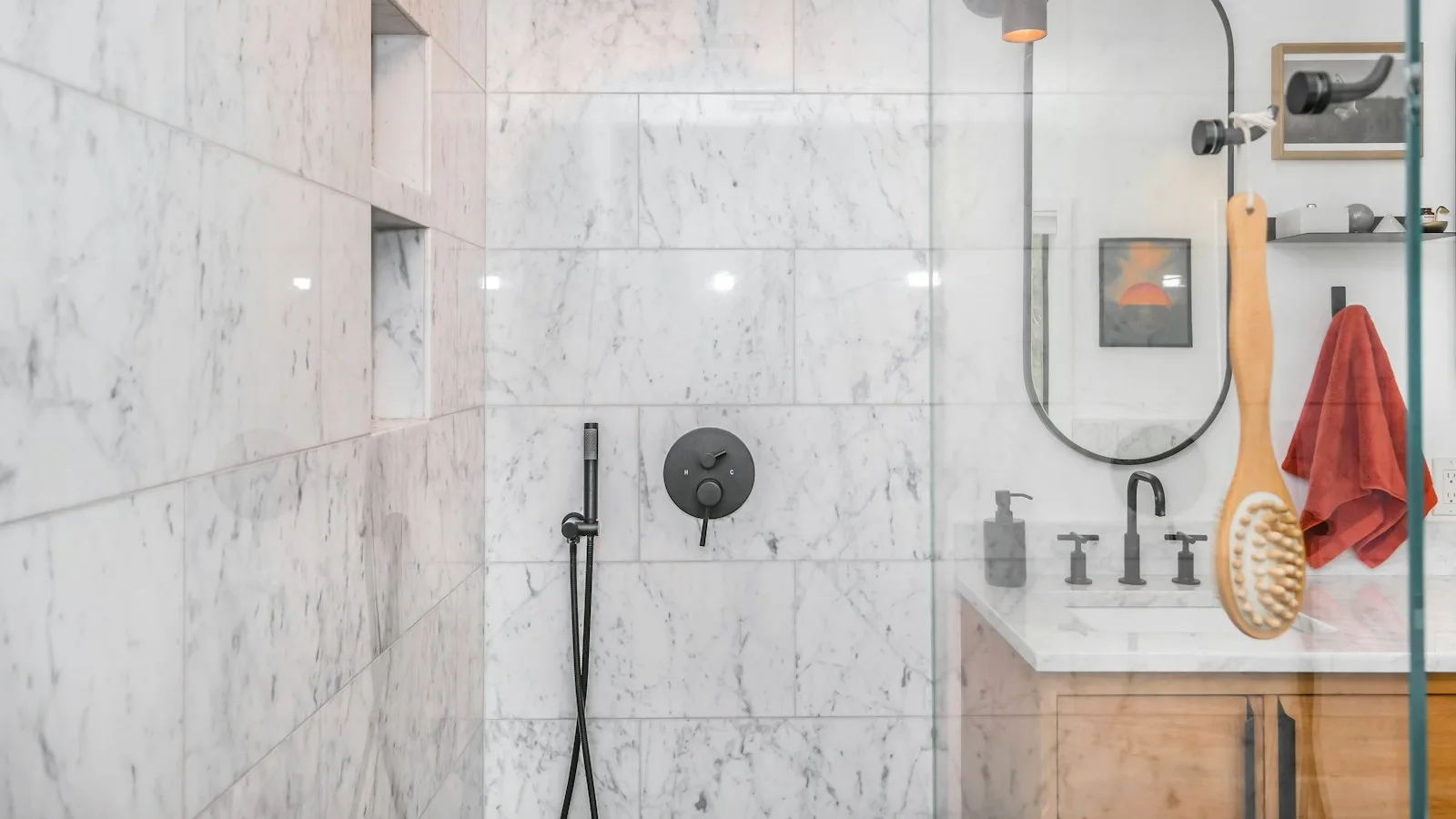
You finished a bathroom last Friday that the customer could not stop talking about. You have one photo of it, taken on the way out, with the toilet lid up, a bucket in the corner and the flash bouncing off the mirror. The before photo does not exist, because on day one you were there to work, not to take pictures.
A job gallery sells more than any paragraph you will write, and almost every contractor's gallery is weaker than their work. The fix is a routine, not a camera.
The shot list, same every job
Decide once what you photograph and then do it on every job, before the first tool comes out and after the last one goes back.
- Before, from the doorway. Stand where the customer stands when they look at the problem. Phone held level, landscape, whole room or whole roof face in frame. Take two.
- The problem, close. The corroded fitting, the scorched outlet, the rotten fascia. This is the photo that explains why the job cost what it did.
- During, once. Open wall, exposed joists, the panel with the cover off. People trust a contractor who shows the middle.
- After, from the same doorway. Same spot, same height, same framing as the before. This is the pair that does the selling, and it only works if the two photos line up.
- One detail. The finished edge, the labeled breakers, the clean caulk line.
Wipe the lens. Turn the lights on. Put the bucket in the hallway. Thirty seconds, every time.
Captions that say scope and town
"Bathroom remodel" tells a visitor nothing they did not see. A caption's job is to say what was done, where, and the thing that made it a real job:
"Full bath remodel, Plainfield. Tile shower with linear drain, new vanity and lighting, relocated the drain line. Nine days."
The town matters twice. A homeowner in Plainfield reads it and relaxes. A search engine reads it and connects you to the town. Google's own image guidance says to place images near relevant text, use short descriptive file names rather than "IMG00023.JPG", and write alt text that is information-rich without stuffing keywords. The caption you wrote for the customer is the alt text, more or less, and "plainfield-bath-remodel-after.jpg" is the file name.
Permission, in one line
You own the copyright in the photos you take. The U.S. Copyright Office is clear that copyright exists automatically once a work is fixed, photographs included, and that works created by an employee within the scope of their job belong to the employer. So the legal ownership is not the problem.
The customer's home is. Posting the inside of someone's house without asking is how a happy customer becomes an unhappy review. Ask in writing, once, in the contract or the quote acceptance: "We photograph our work before and after. We may use photos of this project, without your name or address, on our website and social media. Check here if you would prefer we did not." Most people check nothing; the ones who do, you leave out.
What not to photograph
- House numbers, street signs, mailboxes, mail. Anything that places the house. The town in the caption is enough.
- People. The customer, their kids, the neighbor on the porch. If a face is in frame, that is a different conversation and a different permission.
- Their stuff. Framed photos, medication on the counter, a laptop screen, a wall calendar. Clear the surface or crop the frame.
- Security. Alarm panels, keypads, the safe in the closet, the camera positions. Treat these as off limits even when they are in the way.
- Another contractor's failure, with commentary. Show your repair, not a dig at the last guy. The homeowner hired him too.
Put the gallery where the decision happens
A gallery page is fine. A before-and-after pair on the service page for that exact job is better, because the visitor reading about panel upgrades wants to see a panel upgrade, not a slideshow that starts with a deck.
Pair photos with reviews where you can; a four-line review under the after photo of the same job is the most convincing thing on the site, and how to get more customer reviews covers getting the review. In Webkio the gallery is a section you can drop onto any page, with a caption per image, so the pair can sit next to the service it belongs to. The rest of the page is in how to make a trade business website.
FAQ
Do I need the customer's permission to post photos of their house?
Legally the copyright in your photos is yours, but the inside of someone's home is theirs. Ask in writing as part of the contract, promise not to use their name or address, and give them a way to say no. It takes one line and prevents the only argument a gallery ever causes.
What makes a good before-and-after photo?
The same spot, height and framing for both shots, taken from where the customer would stand, in landscape with the lights on and the lens wiped. The after photo is only as good as the before photo it is compared with, so take the before on day one.
What should a gallery caption say?
What was done, in which town, and one specific detail that made it a real job. Avoid two-word captions and avoid addresses. The caption can double as the image alt text.