Handmade shop website examples
A maker's website has an advantage no marketplace listing has: the whole page is about you. The designs here put the process, the materials and the person next to the work, and handle the two things that break ordinary shops for makers - pieces that exist once, and pieces made to order.
4 designs below, and the six things every good handmade shop website has. Designs and listed sites read live; the judgement reviewed 8 November 2026.
What a good handmade shop website has
The things the examples below have in common, and the reason each one is there.
One-of-a-kind means stock of one
A piece that sells is gone, and the page should say sold rather than vanish. Buyers like seeing what went before; it is proof the work moves.
Made to order, with a lead time
A made-to-order piece needs a lead time on the page and in the confirmation email, not in a message afterwards. Expectations set at purchase are kept.
The process, in pictures
Hands, tools, the bench, the kiln. Three honest photos of the making justify the price better than any paragraph.
Materials and care
What it is made of and how to look after it. It answers the question and signals that the piece is meant to last.
Your own customer list
The marketplace keeps the buyer's email. On your site a signup form and a thank-you email build the list that makes the next collection sell on day one.
Prices that include your time
A price worked out from materials alone is a price that stops you making. The margin calculator is there for the sum.
What goes wrong
- Copying marketplace listings word for word, so your own site looks like a worse version of the listing.
- Taking orders for made-to-order pieces with no lead time stated, then apologising by email.
- Hiding the maker. People buy handmade from a person; a faceless shop loses the reason to buy.
4 handmade shop website designs to start from
Each one opens as a live preview. The words, photos and colours are yours to change; the working parts stay.
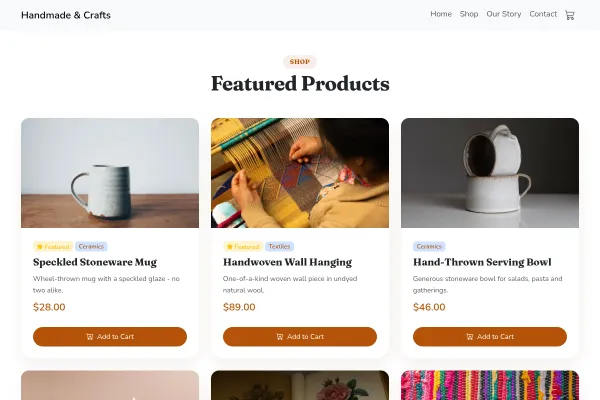
Handmade & Crafts
A maker's shop: the potter at the wheel, the real seeded pieces, five stages from clay to kiln with maker's stamps, what to expect when it arrives, commissions.
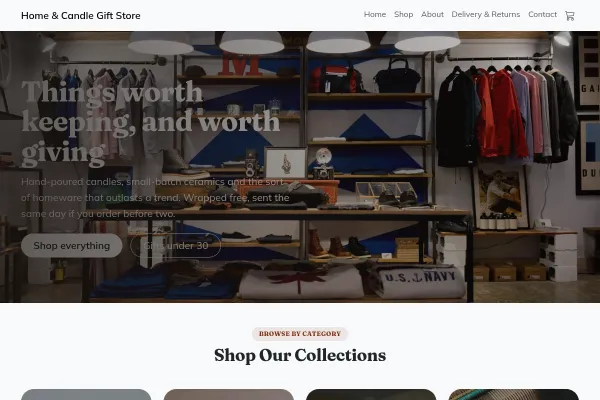
Home & Candle Gift Store
Homeware and gifts with museum-style object keys: numbered markers on the shelf, the real seeded products, wrapped and posted, a gift-choosing service.
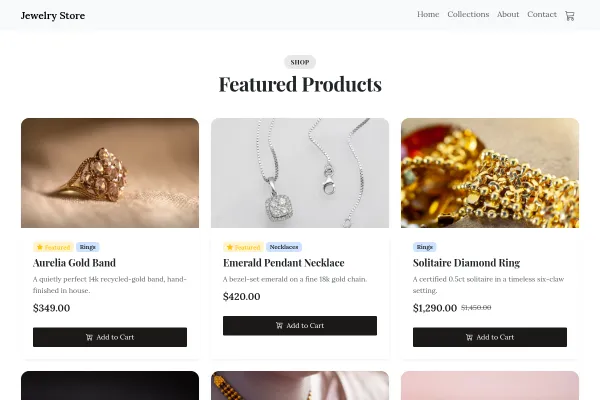
Jewelry Store
Goldsmith: hands at the bench with a gold-ringed loupe over a ring, the real seeded pieces, four bench stages, a consultation booking, recycled gold.
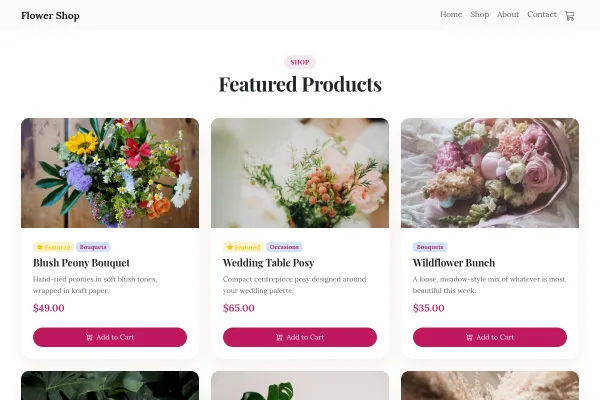
Flower Shop
Florist: a bouquet framed in a kraft-paper wrap with a gift tag, the real seeded bouquets, what is in season as ribbon-tied stems, same-day delivery by six.
Going deeper
Guides from the blog, and a free tool for the sums.
Frequently asked questions
Should I leave Etsy or similar?
Not necessarily - keep it for discovery and move repeat buyers to your own site, where there is no fee per sale and the customer is yours. The guide on leaving the marketplace covers the sequence.
How do I sell something that exists only once?
As a product with a stock of one. When it sells it shows as sold, and can stay visible as part of your body of work.
How do I handle commissions?
A quote request form for bespoke work, and made-to-order products with a stated lead time for pieces you repeat. Both are included in the designs here.
Do I need professional photos?
No. Daylight, a plain background, a steady phone and a little patience. The image resizer tool makes them the right size for the page.
Examples for other trades
Start from one of these
Pick a design, add your details, publish. Free to build; pay when the site is earning its keep.
Build your handmade shop site - free