Online store website examples
A small shop's website is not a marketplace listing: it has to earn trust on its own, in a few seconds, from a visitor who has never heard of you. These examples are the store designs we ship, from a single-product shop to a catalogue with categories, alongside real stores built with Webkio whose owners chose to be listed.
12 designs below, and the six things every good online store website has. Designs and listed sites read live; the judgement reviewed 8 November 2026.
What a good online store website has
The things the examples below have in common, and the reason each one is there.
A product page that answers the questions you get asked
Size, material, what is in the box, how long it takes to arrive. The questions in your inbox are the paragraphs the page is missing.
Shipping and returns before the checkout
A shipping cost that appears only at the last step is the most common reason a basket is abandoned. State it on the product page and in the footer of every page.
Photos that show scale and detail
One photo on white, one in use, one close up. A ring on a hand, a mug beside a book. Scale is what a visitor cannot judge from a single product shot.
Categories a stranger would use
Organise by what people look for, not by how you make things. "Gifts under 30" earns its place; "Collection 2024" does not.
A short checkout
Guest checkout, one page, the payment methods people already have. Every extra field is a few percent fewer orders.
Trust in plain words
Who you are, where you are, how to reach a person. Small shops win on this; hide it and you lose the advantage you have over the giants.
What goes wrong
- Forty products that are really one product in forty sizes and colours, each with its own stock count and photo.
- Prices shown without tax to shoppers who expect them included, or the other way round.
- A "sale" banner that never comes down, so no sale is ever believed.
12 online store website designs to start from
Each one opens as a live preview. The words, photos and colours are yours to change; the working parts stay.
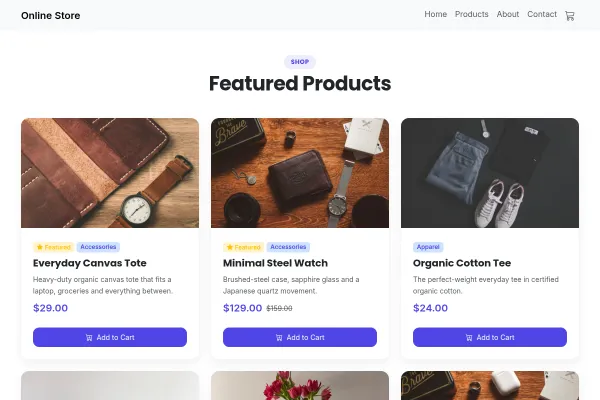
Online Store
Independent online shop at the packing table: a parcel being taped with a shipping label of dispatch, delivery and returns, the real seeded products, six people and plastic-free packing.
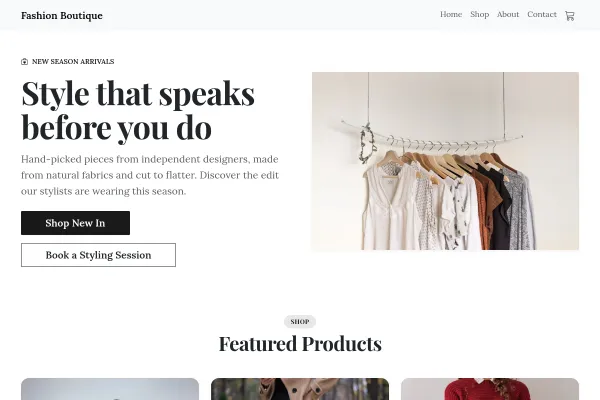
Fashion Boutique
Clothing boutique as a lookbook: numbered looks from the rails, the real seeded pieces, a fitting room of three promises, new in on Thursdays.
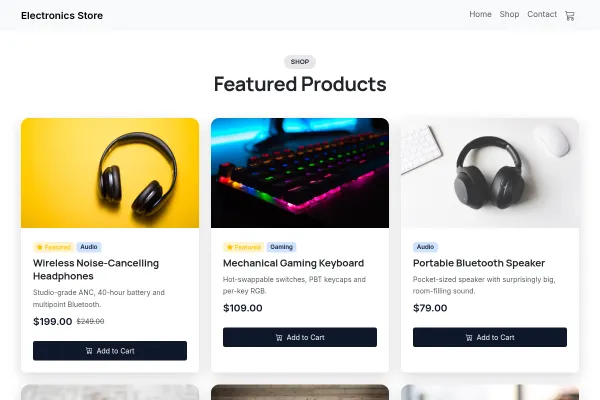
Electronics Store
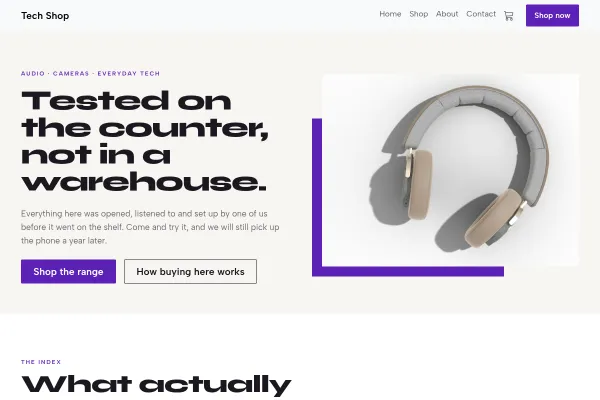
Electronics shop as a datasheet: a dark still life with a spec sheet of how buying here works, the real seeded products, three rooms to try things in.
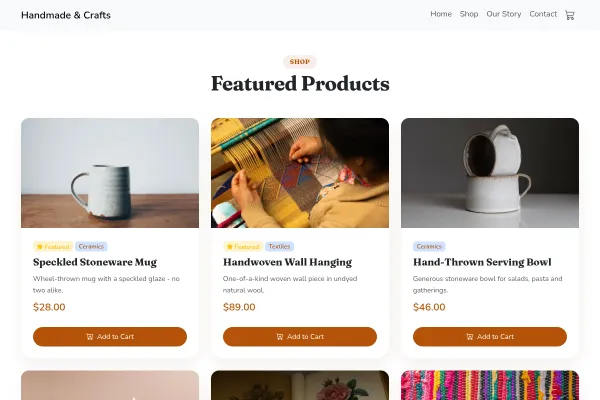
Handmade & Crafts
A maker's shop: the potter at the wheel, the real seeded pieces, five stages from clay to kiln with maker's stamps, what to expect when it arrives, commissions.
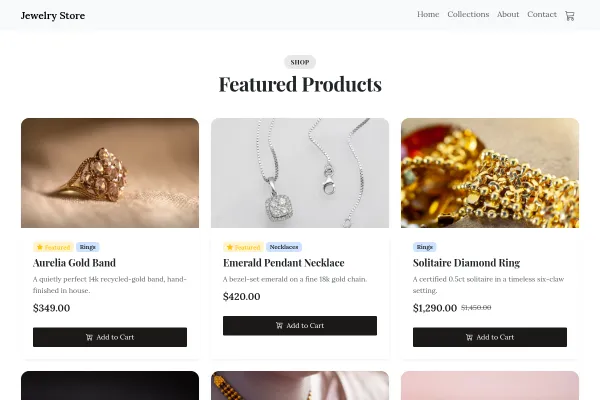
Jewelry Store
Goldsmith: hands at the bench with a gold-ringed loupe over a ring, the real seeded pieces, four bench stages, a consultation booking, recycled gold.
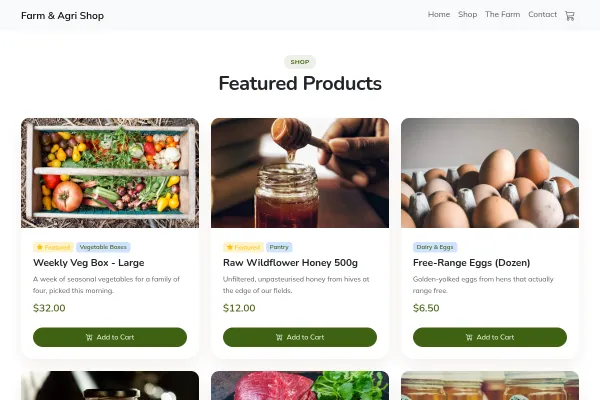
Farm & Agri Shop
Farm shop: the barn sign beside the headline, the real seeded produce, a chalkboard of what is in this week, how the veg box works, the farm in photographs.
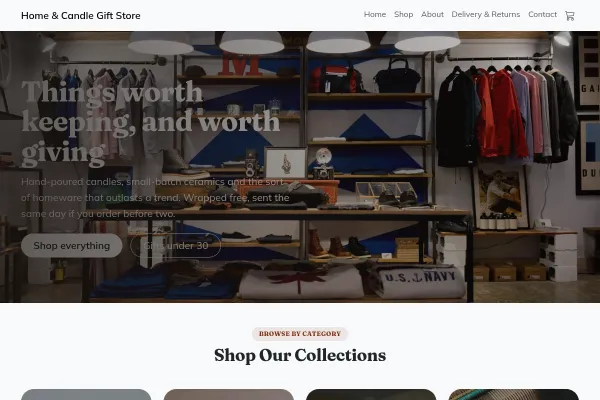
Home & Candle Gift Store
Homeware and gifts with museum-style object keys: numbered markers on the shelf, the real seeded products, wrapped and posted, a gift-choosing service.
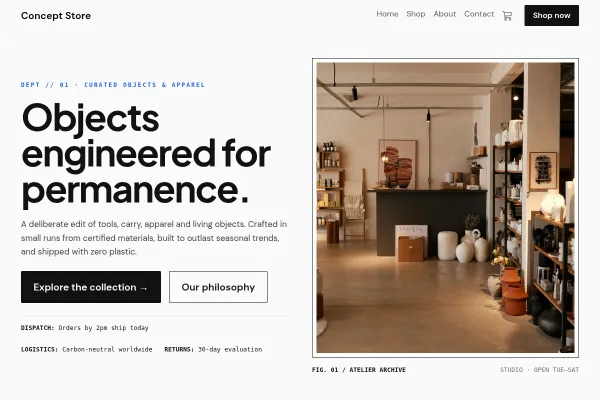
Concept Store
Universal concept store and design studio: an architectural flagship hero with dispatch promises, the real seeded goods, four departments, and plastic-free carbon-neutral shipping.
Grocery & Market
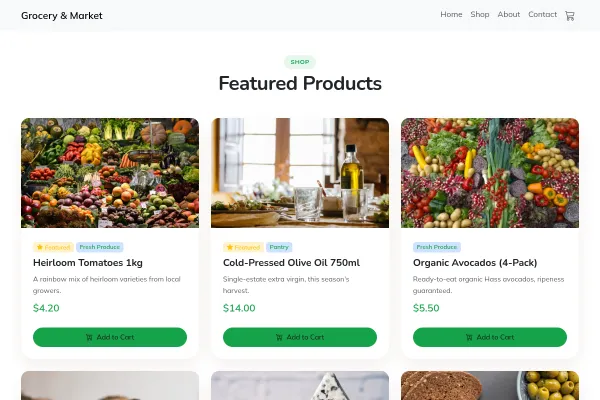
Neighbourhood grocer and deli: a shop-front hero with shelf-edge price tags, the real seeded aisles, how the weekly shop works, the miles on every label.
Phone & Gadget Store
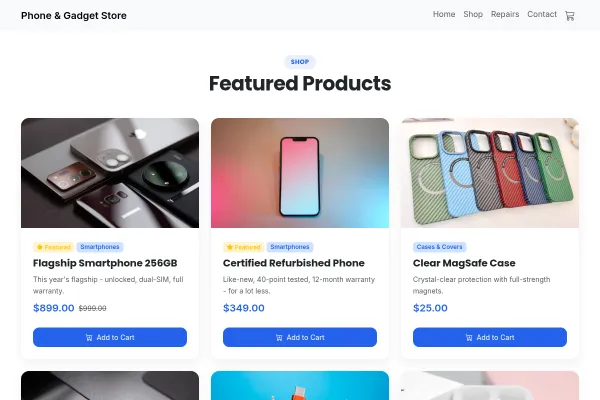
Phone shop with a perforated repair ticket of prices beside a cracked screen, the real seeded phones, then repairs, refurbished and trade-ins as three photo panels.
Flower Shop
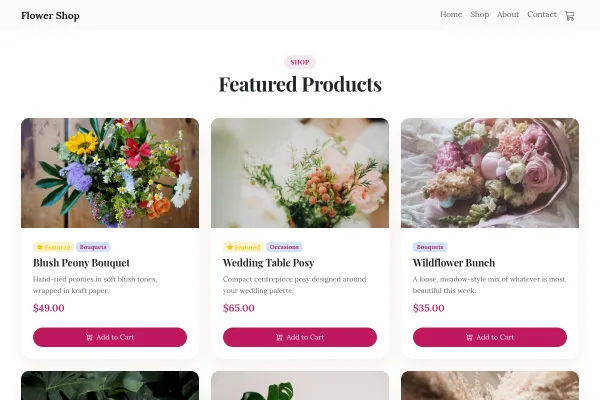
Florist: a bouquet framed in a kraft-paper wrap with a gift tag, the real seeded bouquets, what is in season as ribbon-tied stems, same-day delivery by six.
Going deeper
Guides from the blog, and a free tool for the sums.
Frequently asked questions
How many products do I need before a store makes sense?
One. A single well-photographed product with a clear price and honest shipping sells better than a thin catalogue of twenty. Grow the range when the first one has orders.
Should I sell on my own site or on a marketplace?
Both, often - but the marketplace takes a fee on every sale and keeps the customer. Your own store is where repeat buyers and your email list live. The fee calculator shows the difference on your numbers.
What do these examples include beyond the design?
Products, categories, a cart, checkout, order emails and stock. The design is the surface; the store underneath is already there when you start from one.
Can I run the shop without taking payments online?
Yes. Orders can be placed for collection with payment in store, or with a bank transfer. Add online payment when you are ready.
Examples for other trades
Start from one of these
Pick a design, add your details, publish. Free to build; pay when the site is earning its keep.
Build your online store site - free